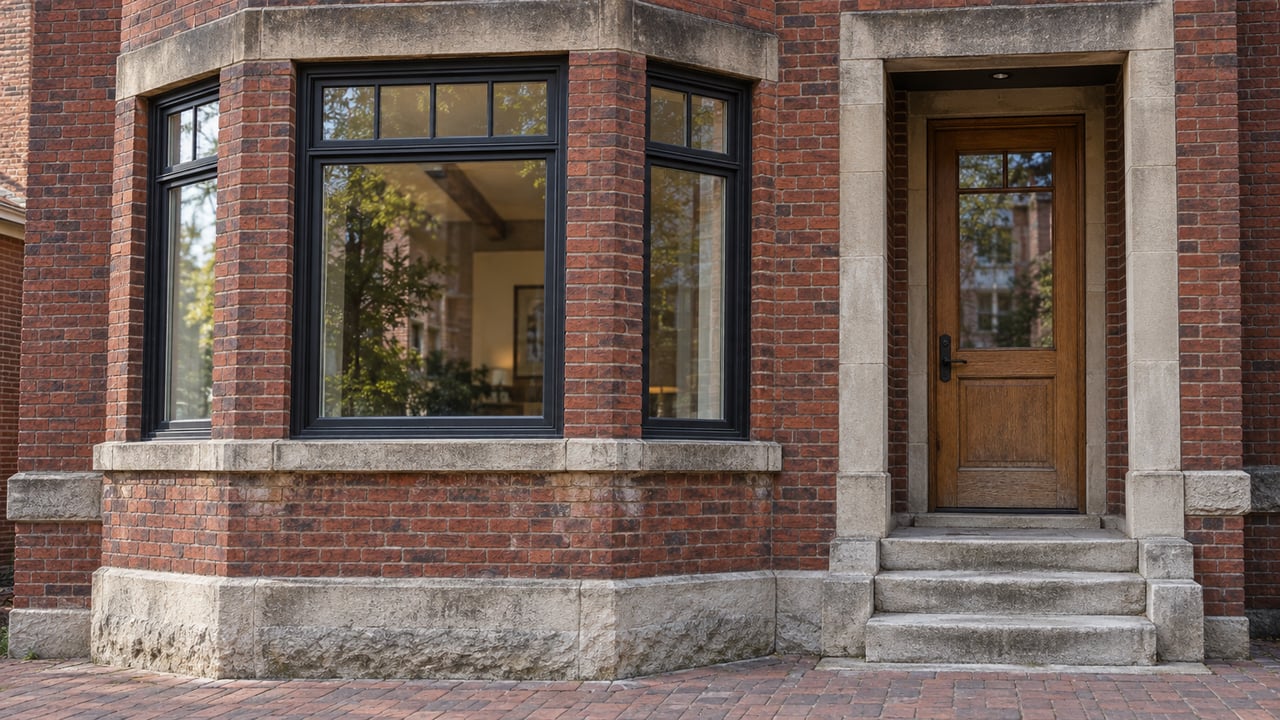
"People have been here for years, they've raised their kids here, and they don't want their big homes anymore, but they want a luxury place to live in town," Mary Leone told the Riverside-Brookfield Landmark at the September groundbreaking for the apartment building she and her husband, Patrick Leone, are developing at 28-30 E. Burlington St.
For a family shopping in Riverside, that same need helps explain why the right house so rarely comes up. Many of Riverside's three- and four-bedroom homes belong to people who would move if the village gave them a smaller place to go, and right now it mostly doesn't. The developers and the village both describe the building going up on East Burlington as housing for exactly those owners.
A village built almost entirely for one stage of life
Riverside's housing stock shows how this happened. In the Chicago Metropolitan Agency for Planning's Community Data Snapshot for Riverside, which uses 2020-2024 American Community Survey estimates, the village has about 3,858 housing units. Of those, 74.8% are detached single-family homes and another 3.1% are attached single-family. In buildings with 20 or more units, the kind of elevator building a downsizer usually looks for, Riverside has 126 units. That's 3.3% of its housing, against 20.1% across Cook County over the same 2020-2024 window.
Bedroom counts look much the same. The same snapshot puts 266 Riverside units, or 6.9%, at zero or one bedroom, compared with 21.1% countywide. About 72% of Riverside homes have three bedrooms or more. Owners occupy 84.8% of occupied units, well above Cook County's 57.7%. Very little has been added. In the 2020-2024 estimates, 61.7% of Riverside's housing dates from before 1940, the median year built is 1938, and only 45 units were built in 2010 or later. In CMAP's 2023 land-use inventory, multifamily housing covers 2.7% of the village's land, while single-family residential covers 49.9%.
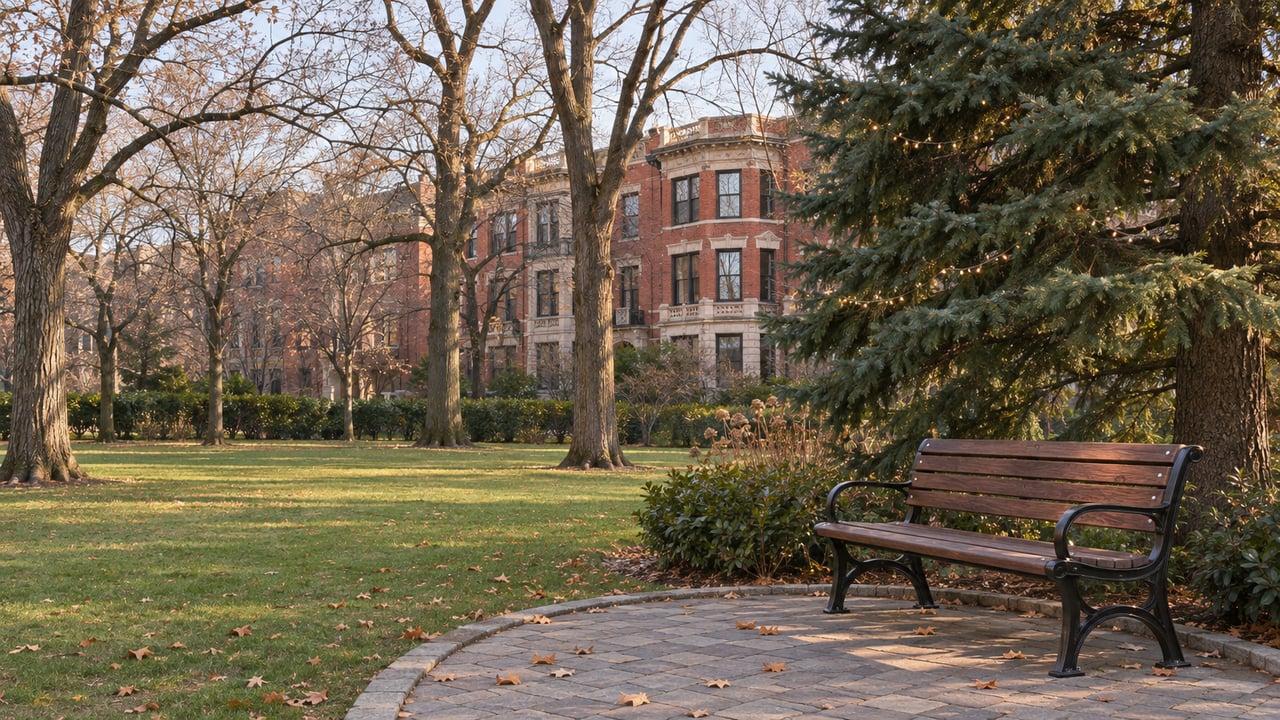
The Olmsted plan produced curving streets lined with family houses, and it still works as designed. The same plan leaves a couple whose children have grown with almost nowhere in town to go. Selling a four-bedroom house and moving to a one-bedroom a few blocks away is something they can barely do in Riverside, because the one-bedrooms aren't there.
Where the economics come in
When someone moves into a newly built home, the home they leave becomes available, and the person who buys that home may leave another one behind. That means a new building can add to supply in two ways: through its own units and through the moves it sets off.
None of those moves happen unless the first owner has a place to go. If a longtime owner can't find a smaller place they want in their own village, they often stay where they are, and the family house that would have been listed stays occupied. For a buyer in Riverside, the result is fewer three- and four-bedroom homes coming to market than the size of the village would suggest. Some of the reason isn't demand from other buyers. Some of the would-be sellers have nowhere they want to land.
Village staff describe the same gap. Anne Cyran, Riverside's community development director, called housing for residents who want to age in place "a missing housing segment in Riverside," according to the Landmark's report on the groundbreaking. "For folks who love the community and want to stay, but aren't, for whatever reason, interested in having a single-family house or a different type of housing this offers another option for them," she told the paper.
What sixteen sales in one month look like
Low turnover also changes how you read market numbers. In August 2026, the Cook County Clerk recorded 16 Riverside property transfers, which the Landmark published by address and price. Brookfield, next door, had 26 that month.
The August transfers ran from $150,000 to $1,260,000, a spread of more than eight times. Three were at $1 million or above, two more fell between $800,000 and $900,000, and seven landed between $445,000 and $739,000. Four were under $400,000, and three of those were under $250,000.
The median of those 16 transfers is $541,500. Remove the three sales of $1 million or more and the median of the remaining 13 falls to $495,000. Remove the three under $250,000 instead and it rises to $630,000. Three closings on either end of one month move Riverside's "typical price" by more than $130,000. In a village this size, a median tells you which homes happened to close that month more than it tells you what a house is worth.
For comparison, the Illinois REALTORS September 2026 report for the nine-county Chicago metro, built from thousands of sales, put the median at $385,000, up 6.9% from September 2025, with inventory down 8.4% over the same year. A sample that large produces a steady number. Sixteen sales do not, and in Riverside the useful comparison is a specific street, house size and condition, read one sale at a time.
One building, 22 front doors
The building is a small first step, and its history explains why so little like it exists. According to the Landmark, construction at 28-30 E. Burlington St. started Tuesday, Sept. 1, 2026, on a five-story building with 22 luxury apartments. Two of them are ground-floor live-work units, with a home in back and a storefront in front. One parcel was the former Coveny Lane home decor and beauty boutique and the other held a medical office. Patrick Leone bought the second parcel in 2018 after buying the one next to it, and he demolished both buildings that year.
Planning took about three years. Village trustees gave final approval at their Jan. 16, 2025 meeting, the Landmark reported. On timing, Cyran said the construction documents call for 450 days of work, which would mean October 2027. Leone estimated about a year and a half, with an opening around March 2028. For now, the site is still under construction.
Cyran also connected the project to the rest of downtown Riverside: new businesses, events like the farmers market, Spring Fling and Holiday Stroll, and the village's streetscape work on East Burlington Street. We wrote about that same block in September, when Burlington Street filled a rare storefront vacancy. Downtown already has some housing over shops. In 2018, the Landmark described the Village Center building just west of 28 E. Burlington as 12 condominiums above four ground-floor commercial spaces.
Twenty-two apartments won't change a village of nearly 3,900 homes on their own. But if even part of the building fills with Riverside owners leaving larger houses, as the Leones and Cyran have described, each of those moves can put a family-sized home on the market.
How a buyer can use this
If you're a family comparing inner-ring suburbs, three practical points follow.
First, expect Riverside's supply to stay tight for structural reasons. With almost 78% of the housing stock single-family and very little new construction since 1990, the village adds family homes mostly when current owners decide to leave. A thin month here doesn't signal that buyers have lost interest. It reflects how the village is built.
Second, value a Riverside house against its own street. A one-month median can move by six figures on a handful of closings, so a fair price for a Riverside three-bedroom comes from nearby sales of similar houses, adjusted for condition and lot, rather than from a village average.
Third, keep an eye on Burlington Street through 2027 and into 2028. Once the building opens, Riverside owners ready to downsize will have 22 new in-town options, and the houses those owners leave would come to market over the months that follow. That outcome is still a projection while the building is under construction.
Our Riverside neighborhood page covers more on the village's streets and housing types.
If you own one of those larger Riverside houses and have been waiting for the right smaller place before deciding anything, the timing of your sale is worth planning early. Clare Sells Homes can walk through your street's recent sales, how a house of your era shows once it's staged, and when listing would fit with your next move. Start with a Free Home Valuation & Staging Consult, and we'll build the plan around the home you're leaving and the one you want next.